
Home › Blackjacks News › Rugby 101
Rugby 101Rugby rucking explained: how to win the contact area
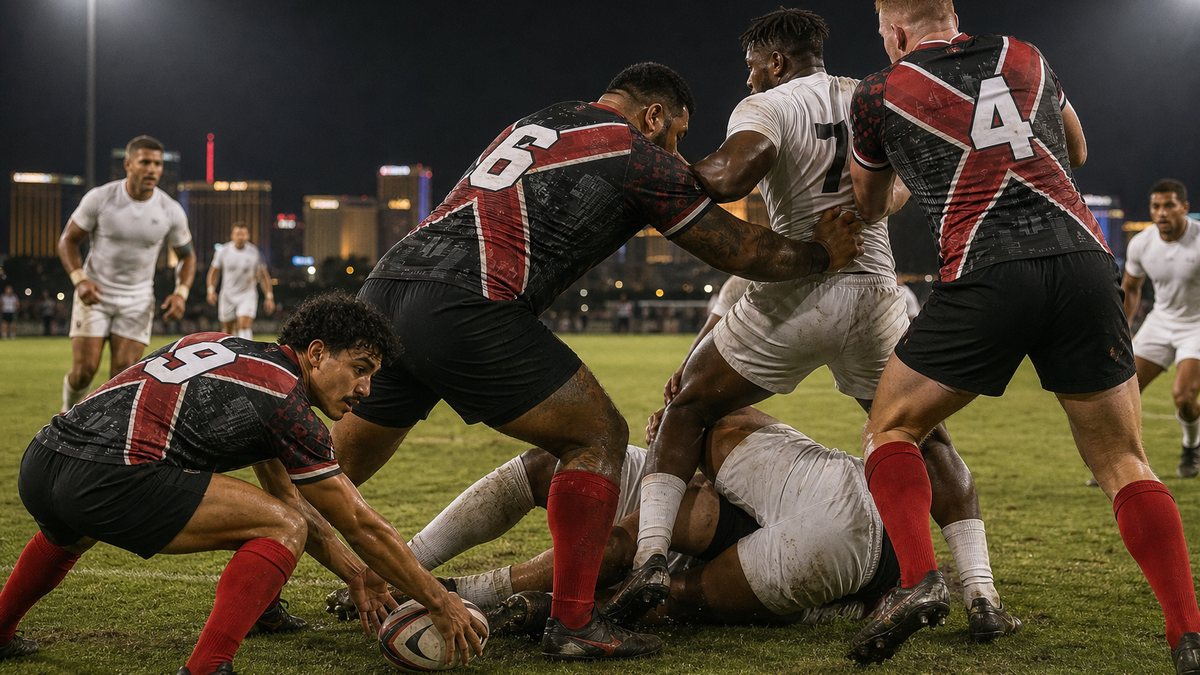
The ruck decides who keeps the ball, how fast it comes back and whether the defense ever gets set. Here is what the law says, what good rucking looks like and how to learn it safely, from the club that built its name on the contact area.
Key facts at a glance
- Definition: ball on the ground, at least one player from each side on their feet and in contact over it (Law 15.2)
- No hands: you can only play the ball with your hands if you got them on it before the ruck formed and stayed on your feet (Law 15.11)
- Entry: from behind your own offside line, bound with the arm, never from the side (Laws 15.5–15.7)
- Body height: heads and shoulders no lower than hips at every stage (Law 15.3)
- "Use it": five seconds to play the ball once the referee calls it, or the other team gets a scrum (Law 15.17)
- How often: one study of the 2018 Super Rugby season coded about 186 ruck cleanouts per match
- Safety: about 10% of match injuries are linked to the ruck, so learn it under a qualified coach
Ask any forward what decides a game and most will point to the same place: the breakdown. Rugby rucking is the contest that happens after almost every tackle, dozens of times a half. When your side wins it quickly, the attack plays against a defense that is still scrambling. When you lose it, or slow it down, the defense resets and your backs run into a wall.
For the Vegas Blackjacks this is home ground. The first value in The Blackjacks Way is Physical: "We dominate the contact area. Every tackle, every ruck, every scrum is a statement of intent." This guide explains how the ruck works in law, what good technique looks like for each role, the most common penalties, and how a beginner can learn it without getting hurt.
What is a ruck in rugby?
World Rugby's Law 15 puts the purpose plainly: the ruck exists "to allow players to compete for the ball which is on the ground." It is a contest for a loose ball, but one with strict rules about how you are allowed to compete.
A ruck can only happen in the field of play. It forms when at least one player from each team is in contact, on their feet, over the ball, which is on the ground. In practice it usually looks like this:
- A ball carrier is tackled and goes to ground.
- The carrier places or presents the ball back toward their own team.
- A teammate arrives and stands over the ball, bound on.
- An opponent arrives and makes contact over the ball. Now it is a ruck.
The key difference from a maul is where the ball is. In a maul the ball is held off the ground by a ball carrier while players bind on. In a ruck the ball is on the grass and nobody may pick it up with their hands until it has come out. That single rule shapes everything about rucking: you win the ball by moving bodies, not by grabbing it.
A ruck is also different from the tackle itself. Before a ruck forms, a defender who is on their feet can try to win the ball with their hands, which is called a "jackal" or a turnover attempt. Once a ruck has formed, that window has closed unless the player already had hands on the ball before the ruck formed and stayed on their feet. If you are new to the tackle side of this, our sister club the Vegas Knights has a full guide to how to tackle in rugby safely.
What are the main ruck laws?
Law 15 is short, but almost every clause comes up in a match. These are the ones every player should know, in plain language, taken from the current World Rugby law text.
| Law | What it says (plain English) | Sanction |
|---|---|---|
| 15.3 | Heads and shoulders no lower than hips at every stage of the ruck | Free-kick |
| 15.4 | Each team's offside line runs through the hindmost point of any of its players in the ruck | Penalty if offside |
| 15.5–15.6 | Join on your feet from behind your offside line; alongside the hindmost player is fine, in front is not | Penalty |
| 15.7 | Bind onto a teammate or opponent, with the bind coming before or at the same time as any other contact | Penalty |
| 15.8 | Either join the ruck or get back behind your offside line | Penalty |
| 15.11 | No handling the ball in the ruck (unless your hands were on it before the ruck formed and you stayed up) | Penalty |
| 15.12–15.13 | Try to stay on your feet; be caught in or bound to the ruck, not just standing alongside it | Penalty |
| 15.15 | Players on the ground must move away from the ball and not play it | Penalty |
| 15.16 | No collapsing the ruck, jumping on it, stepping on players, kicking the ball out or faking the end of a ruck | Penalty or free-kick |
| 15.17 | After "use it", the ball must be played within five seconds | Scrum to the opposition |
Two points trip up new players more than any other. The first is the offside line. At a ruck it is not a fixed line on the field; it moves with the hindmost foot of your own team's players in the ruck. If you are standing in front of it and not part of the ruck, you are offside. The second is the gate, the coaching word for joining straight through from behind rather than coming in from the side. Law 15.6 lets you join alongside the hindmost player, but not in front of them.
The laws keep evolving. In May 2024 World Rugby banned the "crocodile roll", in which a player rolls, twists or pulls an opponent who is on their feet in the tackle area, and started a law trial to protect the scrum-half while the ball is near a tackle, ruck or maul. The protection of the nine now appears in Law 15.18 as a global law trial. In March 2024 World Rugby also asked referees to call "use it" sooner once the ball is clearly won. And in Clarification 2-2026 (1 June 2026), it said a scrum-half who steps past the back foot to play the ball can be allowed to carry on once the contest is clearly over. Competitions adopt trials at different times, so check which version your referee is using.
The ruck is where the game is honest. You can hide a bit in open play, but not over the ball. Either you got there, got low and moved someone, or you didn't. That is why we judge a forward's game by what happened at the breakdown long before we look at how many meters they ran.
Why is winning the ruck so important?
Because it happens so often. A study published in Frontiers in Psychology in April 2019 by Kraak and colleagues coded 22,281 ruck cleanouts across 120 matches of the 2018 Super Rugby competition, an average of about 186 cleanouts a match. Even if you play at a lower level with fewer phases, the ruck is the most frequent contest in the game after the tackle.
Ruck work also falls on a small number of people. At the 2025 Women's Rugby World Cup, the tournament's leader for "own rucks hit" was a Canada back-rower with 110, according to Rugby World Cup statistics published on 28 September 2025. That is a lot of contact for one player across a tournament, and it is why back-rowers train ruck entries as hard as any other skill.
What a ruck gives you is speed of ball. Coaches often talk about "quick ball", meaning the ball is back and available within a few seconds of the tackle. Quick ball means the defenders who were involved in the tackle are still on the ground or getting back into the line. Slow ball gives every defender time to get back onside and set. In simple terms:
- Quick ball (about three seconds or less): defense not set, space out wide, attackers can play off the front foot.
- Slow ball: defense set, line speed high, the next carrier gets hit behind the gain line.
- Turnover: the opposition counter-rucks or wins a penalty, and your attack is over.
Defensive systems are built around that moment. The Knights explain how a defense chooses between rushing and sliding in rugby defense explained: blitz, drift and line speed, and every one of those systems depends on how fast the ball comes out of the ruck.

How do you ruck properly? Technique by role
A good ruck is a team action with four jobs. Each one has a few key points that come straight from World Rugby's Rugby Ready guidance on the ruck and the law itself.
1. The ball carrier: go to ground well
The ruck starts with the carrier. You want to stay strong in the tackle for as long as possible, then land and turn so your body is between the ball and the opposition. Rugby Ready says the carrier should present the ball quickly with both hands, as far from the opposition as possible. Common methods are a long "place", stretching the ball back at arm's length, or a "pop" to a teammate arriving at your shoulder. Once the ball is placed you must release it and, under Law 15.15, make every effort to move away from it.
2. The first arriving player: the most important job
The first support player decides most rucks. Their task is to arrive fast, on their feet, and remove or block the nearest threat over the ball, usually an opponent trying to get their hands on it. Key points:
- Enter straight through the gate, from behind the hindmost foot of the tackled player.
- Get low before contact, with a flat back and your head and shoulders above your hips, eyes up.
- Bind with the whole arm before or at the same time as your shoulder makes contact.
- Drive forward and up through the target, not down onto them, and keep your feet moving.
- Stay on your feet until the ruck ends. Going off your feet is one of the most common penalties.
3. The second arriving player: secure or seal
The second player reads the picture. If the first player has cleared the threat, the second may simply "seal" over the ball, bound on and low, so the scrum-half has a clean platform. If an opponent is still contesting, the second player helps drive them off. Because many teams commit only two or three players to each ruck, the second player also has to judge whether a third is needed or whether to stay out and be ready for the next phase.
4. The scrum-half: use it
The scrum-half's job is to get the ball out cleanly and on time. Once the referee calls "use it", the clock starts: five seconds, then a scrum to the other side. Good scrum-halves arrive early, communicate with the forwards about how many players are needed, and pass or box-kick without hesitation. With the global trial protecting the nine around the ruck, scrum-halves get a little more time, but referees are also calling "use it" sooner.
Everyone loves the big cleanout. The quiet win is the first player who arrives low, binds and stays on his feet for two seconds. Do that every time and your scrum-half will never have to dig the ball out. We would take ten boring, legal ruck entries over one highlight-reel hit that ends with a penalty.
How do defenders compete at the ruck?
Defending the ruck is about choosing your moments. A defending team has three main options after a tackle:
- Jackal before the ruck forms. A defender on their feet and over the ball tries to lift it before an attacker arrives. Once a ruck forms, they must have already had hands on the ball to keep playing it.
- Counter-ruck. Defenders bind on and drive the attackers backward off the ball, trying to win it with their feet or by walking over it.
- Fan out. Stay out of the ruck entirely and fill the defensive line, accepting the attacking team will keep the ball.
Most teams fan out at most rucks and pick a few to attack: when the carrier is isolated, when their support is slow or when the tackle happens near the touchline. Competing everywhere leaves gaps in the defensive line. Defenders also have to respect the offside line. Being "in the side door" or loitering in front of the hindmost foot gives away penalties and, near your own line, yellow cards.
What are the most common ruck penalties?
Referees look at the same handful of offenses at every breakdown. If you are learning to ruck, these are the ones to avoid:
- Hands in the ruck. Picking the ball up with your hands after the ruck has formed (Law 15.11).
- Off your feet. Falling over the ball or lying on it to slow it down (Laws 15.12 and 15.16d).
- Side entry. Joining from the side instead of from behind the hindmost foot (Laws 15.5–15.6).
- Not releasing or not rolling away. The tackled player or tackler staying on the ball (Law 15.15).
- Collapsing the ruck. Pulling it down or jumping on top of it (Law 15.16b).
- Offside at the ruck. Defenders or attackers standing in front of their offside line and not part of the ruck.
- Dangerous cleanouts. Hitting a player who is not part of the ruck, contact with the head or neck, or the crocodile roll.
The 2019 Super Rugby study looked specifically at how often illegal and dangerous cleanouts were penalized and found that many went unsanctioned. That is not permission to try them. At club level the safest and most effective approach is simple: arrive on your feet, bind, stay low and drive through the player in front of you.
Is rucking safe? How to learn it properly
Rugby is a contact sport, and the breakdown carries real risk. Kraak and colleagues note that about 10% of all match injuries are associated with the ruck in professional and community rugby. Most of the risk comes from poor body position, players arriving off their feet, contact with the head and neck, and illegal cleanouts on players who are not part of the ruck.
The way to reduce that risk is good coaching and gradual progression:
- Learn under a qualified coach. In the United States, USA Rugby requires every tackle-rugby coach to hold a Level 1 certification, complete World Rugby's Rugby Ready and concussion courses, keep SafeSport training current and pass a background check. Its coaching pages list the requirements.
- Progress slowly. Start with body position and footwork, then shields and pads, then walking-pace contact, and only then live rucking.
- Build the body first. Neck, trunk and leg strength all help you hold a strong, low position. The Vegas Lions cover the basics in strength training for rugby, but follow a program from a qualified coach.
- Respect the laws. Head above hips, bind with the arm, stay on your feet. The laws on body height and binding exist for your safety as much as for fairness.
- Report symptoms. If you take a knock to the head, stop and get checked by a qualified person. This article is not medical advice.
If you prefer to learn rugby without contact first, touch and non-contact formats are a great on-ramp. Downtown Rugby has a guide to touch rugby: rules, tips and how to start.
Simple ruck drills for club training
These are common progressions used by many clubs. Run them with a coach present, at a pace that suits the group.
| Drill | What it trains | Contact level |
|---|---|---|
| Body-height walk-through | Low, flat-backed position over a ball; head above hips; arm bind | None |
| Ball placement | Carrier goes to ground, turns and places the ball back at arm's length | Low (onto mats) |
| Gate entry and seal | First and second support enter from behind the hindmost foot and seal over the ball | None to low |
| Shield cleanout | First arriver drives a padded shield off the ball while staying on their feet | Moderate (pads) |
| 2 v 1 over the ball | Read the threat: clean, seal or stay out | Moderate |
| "Use it" race | Scrum-half clears the ball within five seconds of the call | None |
Coaches who want to track ruck speed at training can do it with a phone timer or a simple spreadsheet. If you are tempted to build your own tracker app, our partner Vibe Coding explains how people are building small apps with AI tools.
How does rucking work in tens and sevens?
The ruck laws are the same in sevens and tens, but the numbers change how teams use them. In sevens, with only seven players on a full-size pitch, teams commit very few bodies to each ruck and often try to avoid going to ground at all. In tens, the format of the APR Games 2027, there are enough forwards for a real contest at the breakdown but more space everywhere else. That makes the first arriving player even more important: one quick, legal entry can produce the fast ball that breaks a ten-man defense.
Rugby league is different again. League has a "play-the-ball" instead of a contested ruck, so there is no fight for the ball on the ground. The Vegas Kings explain the full comparison in rugby union vs rugby league: the differences explained.

The Blackjacks and the contact area
The Blackjacks have played in Las Vegas since 1976, and the club's honors list counts three national titles. Its 2009 playoff run included comebacks from 22–0 and 28–0 down, and in 2010 it won the USA Rugby Division I national championship, beating Belmont Shore 36–22. You can read that story in rugby in Las Vegas: a history from 1976 to the APR Games and see the real photos in the Blackjacks trophy cabinet.
Comebacks like that are not won by one flashy play. They are won by keeping the ball through phase after phase, which means winning ruck after ruck. That is what "Physical" means in The Blackjacks Way: winning the contact area within the laws, together.
Win the breakdown in Las Vegas
The APR Games 2027: Memorial Day weekend, May 29–31, Las Vegas. 10-a-side rugby, two 20-minute halves, evening kickoffs. Men's Elite ($10,000 prize pool), Women's Social ($5,000) and Youth divisions. Player entry $299 includes a jersey, kit bag, at least three pool games and opening-night access.
Join the APR Games waitlistHow to start rucking with the Blackjacks
- Join The Breakdown. American Pro Rugby's free weekly newsletter has rugby news, one skill broken down each week and Blackjacks tryout information first. Subscribe here.
- Learn under a coach. APR's coaching clinic runs May 28–31, 2027, alongside the Games.
- Get on the waitlist. Player registration for the APR Games opens through americanprorugby.com.
- Follow the game. Keep up with the latest law changes and results on APR's global rugby news.
Coming to Las Vegas for the Games? Our partner Luna Appleton covers where to stay, eat and celebrate in the city. Want to look the part at training? Find team gear in the APR merch store, and meet every franchise on the APR teams page.
Nobody is born knowing how to ruck. Every forward who has worn the Blackjacks jersey learned it the same way: low, bound, on their feet, a thousand times at training before it counted on a Saturday. Start there, learn it from a qualified coach, and the contact area becomes the best part of the game.
Frequently asked questions
What is a ruck in rugby?
A ruck forms when the ball is on the ground and at least one player from each team is on their feet, in contact and over the ball. Players compete for the ball by driving opponents away or rucking it back with their feet, not with their hands.
What is the difference between a ruck and a maul?
In a ruck the ball is on the ground. In a maul the ball is held off the ground by a ball carrier while at least one teammate and one opponent are bound on.
Can you use your hands in a ruck?
No. Under Law 15.11 players may not handle the ball in a ruck unless they had their hands on it before the ruck formed and stayed on their feet. Otherwise it is a penalty.
Where is the offside line at a ruck?
Each team's offside line runs parallel to the try line through the hindmost point of any of its players in the ruck. Players not in the ruck must stay behind it or join from behind it.
What does "use it" mean?
The referee calls "use it" when the ball is clearly won and available at the back of the ruck. The team then has five seconds to play the ball, or the opposition is awarded a scrum.
What is the gate in rugby?
The gate is a coaching term for entering a ruck or tackle area straight from behind the hindmost foot of your own players, rather than from the side. Law 15 allows joining alongside the hindmost player but not in front.
What is a crocodile roll?
It is rolling, twisting or pulling an opponent who is on their feet in the tackle area. World Rugby made it a penalty offense from 1 July 2024.
How many players should join a ruck?
There is no fixed number. Many teams aim to secure most rucks with two or three players so they keep enough people in the attacking line, and commit more only when the ball is under threat.
Is rucking dangerous?
The ruck carries a real injury risk; research estimates about 10% of match injuries are linked to it. Learning correct body position, binding and staying on your feet under a qualified coach, and progressing gradually, reduces that risk.
Do rucks happen in the APR Games?
Yes. The APR Games 2027 are played as 10-a-side union rugby, so tackles lead to contested rucks under the same laws. Full rules will be confirmed with player registration.
Keep reading
Sources
- World Rugby Passport: Laws of the Game, Law 15 Ruck (accessed 26 October 2026)
- World Rugby: Shape of the Game, reinforcement of current law, March 2024
- World Rugby: Law Clarification 2-2026 (Law 15), 1 June 2026
- World Rugby: Rugby fan-focused law changes confirmed, 9 May 2024
- World Rugby Passport: Rugby Ready, The ruck (accessed 26 October 2026)
- Kraak W. et al., Sanctioning of illegal and dangerous ruck cleanouts during the 2018 Super Rugby competition, Frontiers in Psychology, 5 April 2019
- Rugby World Cup: Standout stats of the Rugby World Cup 2025 final, 28 September 2025
- USA Rugby: Coaching education and compliance requirements (accessed 26 October 2026)
- American Pro Rugby: APR Games 2027
This article explains the laws and common coaching points for the ruck using the World Rugby and USA Rugby sources listed above, current as of October 2026. Laws and law trials change and competitions adopt them at different times, so check with your referee or union. Rugby is a contact sport: learn rucking and all contact skills under a qualified coach. This article is not medical advice.