
Home › Blackjacks News › Training
TrainingThe rolling maul: how forwards drive a lineout maul
The driving maul is the most physical set play in rugby union: eight forwards, one ball and a few meters of grass. Here is what the law says, how attacking packs build and steer a maul, how defenders stop one legally, and how to learn it safely.
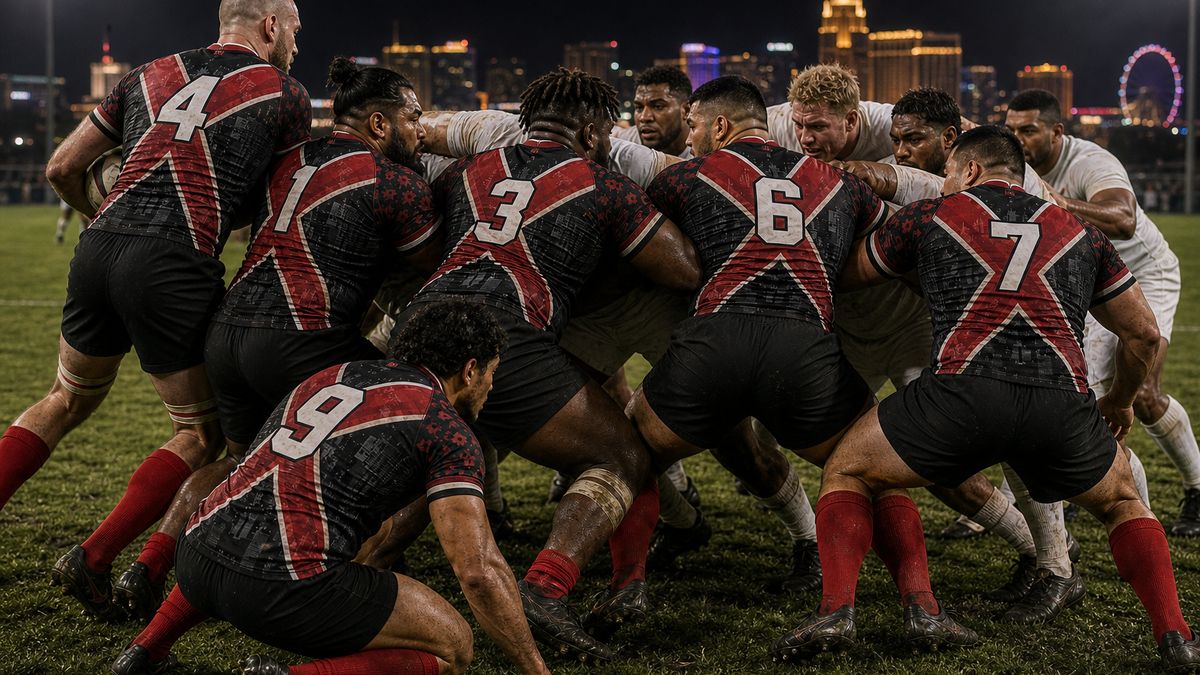
Key facts at a glance
- Definition: ball carrier plus at least one player from each team, bound and on their feet, ball off the ground (Law 16.2)
- Direction: once formed, a maul must move toward a try line (Law 16.3)
- Joining: from an onside position, bound onto the hindmost player, head and shoulders no lower than hips (Law 16.7)
- Stops: one restart allowed within five seconds; a second stop means "use it" (Laws 16.14–16.15)
- No collapsing: pulling down a maul, jumping on it or dragging players out is a penalty (Law 16.11)
- Newest guidance: World Rugby's maul guideline of 1 June 2026 targets lifters blocking the jumper, sideways "shift drive" transfers and late joiners
- Why it matters: about half of tries at the 2023 Men's Rugby World Cup came from lineout-origin plays, according to The Rugby Site
Few things in rugby are as simple to describe and as hard to stop as a good rolling maul. A lineout five meters out, a clean catch, a pack that binds in a heartbeat, and then eight bodies moving as one toward the line. Opponents know it is coming. They still struggle to stop it.
For the Vegas Blackjacks, the maul sits right at the heart of what the club stands for. The first value in The Blackjacks Way is Physical: "We dominate the contact area. Every tackle, every ruck, every scrum is a statement of intent." The maul is where that statement is made by the whole pack together. This guide covers how the law defines a maul, how a lineout drive is built step by step, the roles of each forward, the 2026 refereeing guidance, how defenders stop a maul legally, and the drills clubs use to learn it safely.
If you have not read it yet, start with our guide to rugby rucking and the contact area. The ruck and the maul are the two halves of the breakdown, and they reward the same habits: low, bound and on your feet.
What is a maul in rugby?
World Rugby's Law 16 sets out the purpose of the maul: it exists "to allow players to compete for the ball, which is held off the ground." That last part is the key difference from a ruck. In a ruck the ball is on the grass and nobody may handle it. In a maul a ball carrier holds it, and players bind around that carrier to push, protect or try to win it.
A maul can only take place in the field of play. It consists of a ball carrier and at least one player from each team, bound together and on their feet. In practice that means three players is the minimum: the carrier, one teammate bound on, and one opponent bound on. Mauls can form anywhere on the pitch, for example when a carrier is held up in a tackle and teammates bind on. But the maul most people picture is the one that forms straight from a lineout.
Once formed, the law says a maul must move toward a try line (Law 16.3). The maul ends successfully when the ball or the ball carrier leaves it, when the ball is on the ground, or when the ball is on or over the try line (Law 16.16). That third ending is the one every attacking pack wants.
What is a rolling maul, and why is it so hard to stop?
"Rolling maul" and "driving maul" are coaching terms rather than law terms. They describe a maul the attacking team keeps moving, either straight or by shifting its point of drive, so that it rolls forward meter by meter. Most come from a lineout near the opposition line, which is why commentators also call it a "lineout drive."
It is hard to stop for three reasons. First, the attacking pack is organized before contact: everyone knows the call, the jumper and the shape. Second, the ball is at the back of the maul, often four or five bodies away from the nearest defender who can legally reach it. Third, the law protects the structure. Defenders may push against a maul, but they may not pull it down or drag attackers out of it. Collapsing a maul near the line is a quick route to a penalty try and a yellow card.
The numbers show how much teams rely on the lineout as a platform. Writing for The Rugby Site in February 2024, analyst Nick Bishop noted that lineout-origin plays accounted for almost half of all tries at the 2023 Men's Rugby World Cup, and that the share coming from the driving maul threat was growing. A driving lineout, he argued, can pull five or six defending forwards toward the ball without the penalty risk of a scrum. Not every lineout try is a maul try, though. In its analysis of the 2022 Six Nations (Alan Dymock, March 2022), Rugby World found that Ireland scored 11 of their 24 tries from lineouts, about 46%, but that the official data credits a maul try to the player who touches down, which hides how many tries the maul actually created.
A rolling maul is honest rugby. Everyone in the stadium knows it is coming, and it still works when eight forwards trust each other enough to bind, stay low and push in the same direction. That is the kind of rugby this club was built on in 1976 and still believes in today.
What are the main maul laws?
These are the clauses of Law 16 that come up in almost every maul, in plain language, taken from the current World Rugby law text.
| Law | What it says (plain English) | Sanction |
|---|---|---|
| 16.2 | A maul is a ball carrier and at least one player from each team, bound and on their feet. A player ripping the ball must stay in contact until it is transferred; no long-arm transfers | Penalty for illegal transfer |
| 16.3 | Once formed, the maul must move toward a try line | See 16.14–16.17 |
| 16.4 | Each team's offside line runs through the hindmost foot of its players in the maul | Penalty if offside |
| 16.5–16.7 | Join from an onside position, bound onto the hindmost player, with head and shoulders no lower than hips; otherwise retire behind the offside line | Penalty |
| 16.8–16.10 | Stay on your feet; be caught in or bound to the maul; the ball carrier must not slide or move backward in the maul | Penalty |
| 16.11 | No intentionally collapsing the maul, jumping on it, dragging opponents out or faking the end of a maul | Penalty |
| 16.14–16.15 | If the maul stops for more than five seconds, or stops a second time, the referee calls "use it" | Scrum if not used |
| 16.17 | Unsuccessful end: ball unplayable, maul collapses (not by foul play), no movement for five seconds, or "use it" ignored for five seconds | Scrum |
| 16.18 (trial) | Players in the maul may not play an opponent within one meter who is trying to play the ball away | Penalty |
Two points confuse new forwards. The first is the offside line. Just like at a ruck, it moves with the hindmost foot of your own team's players in the maul. If you are not bound in and you are in front of that line, you are offside. The second is joining. Law 16.7 says you must bind onto the hindmost player. Arriving late and binding onto the side of the maul, or in front of the ball, is a penalty.
World Rugby has also considered limiting the maul further. A "one-stop maul" trial, under which a maul could only stop once before the ball had to be used, was discussed but, according to World Rugby's global law trials notice (approved 14 November 2024 for competitions starting from 1 January 2025), it was "not approved for progression." What was approved was the new protection for the scrum-half at the maul, now Law 16.18.
What changed for the maul in 2026?
On 1 June 2026, World Rugby published a law application guideline on the maul, applying from that date to new competitions. It does not change the law text. It tells referees how to apply it, and it reminds everyone that the maul is "a key contest for possession." The main points:
- Lifters must not block the jumper. When lowering the jumper, lifters must not step in front of them. Opponents must have "access" to tackle or drive on the jumper when they land; otherwise it is obstruction under Law 9.3.
- No shift drive. Handing the ball backward past players in front, sometimes called a long-arm or sideways transfer, is prohibited. To keep the ball at the back, pass it to the hindmost player as others join.
- Join onto the hindmost player. Late attacking runners who bind on ahead of the hindmost player can be penalized, and players cannot link up in a chain and swing around into the opposition's side.
- No swinging around. Outside players must keep their original bind and not swing around the lifter or the maul to reach the attacking side.
- No dragging. Once a player loses their dominant position and starts to pull or drag, they must leave the contest or be penalized.
The guideline also defines "bound" precisely: gripping another player's body between the shoulders and hips, "with the whole arm in contact from hand to shoulder." Competitions adopt guidance at different times, so club players should check what their referees are applying.

How do you build a lineout maul? Step by step
Every team has its own calls and shapes, but the sequence below is the backbone of most lineout drives, and it follows World Rugby's Rugby Ready guidance on the maul and the law.
1. The throw and the catch
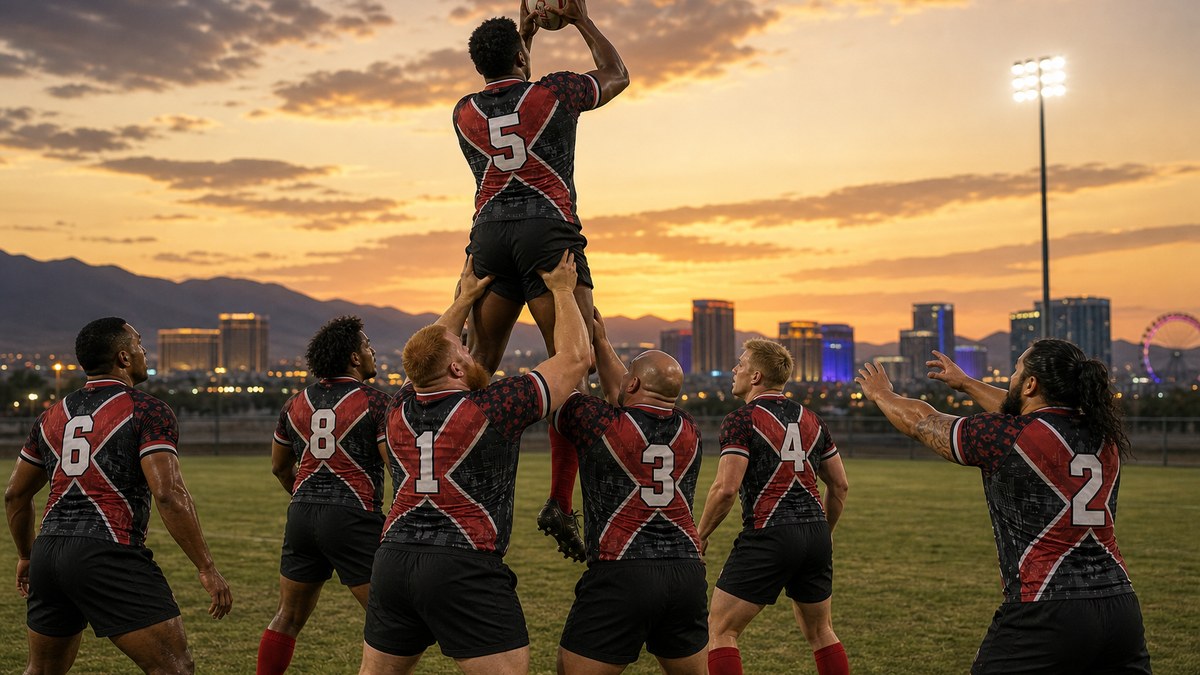
The hooker throws straight down the middle of the lineout. The jumper is lifted by two lifters, catches the ball at full height and is lowered under control. The catch has to be secure before anything else happens. Many coaches tell jumpers to bring the ball down to their chest and turn slightly so their back is toward the opposition, protecting the ball as they land.
2. The bind and the "set"
As the jumper lands, the lifters stay bound on and drive in close. Other forwards arrive and bind with the whole arm. Rugby Ready stresses joining "by binding onto a team-mate," keeping the spine in line with the direction of drive and keeping head and shoulders above hips. This moment, often called the "set," is when the maul is most fragile. Under the 2026 guideline, lifters must not step in front of the jumper to shield them: the defenders must have a legal way to get at the jumper.
3. Moving the ball to the back
Once the maul is formed, the ball is passed back hand to hand to the player at the back. The law is strict here. The ball must not be handed back past players in front in a sideways or long-arm transfer, and the ball carrier must not slide backward through the maul. The ball reaches the back by being passed to the hindmost player as others join behind.
4. The drive
Now the pack drives. Good mauls move with short, quick steps, low body height and everyone pushing at the same time. Many teams use a call to start the drive so that nobody pushes early or late. Players at the front take the weight of the defense; players at the back keep the ball safe and steer.
5. Steering, or "rolling"
If the defense holds one side, the maul can change its point of drive and move toward the weaker side. This is where the name "rolling maul" comes from. It must still move toward the try line, and players must keep their binds rather than swinging around the outside.
6. The finish
Near the line, the player at the back may stay in and be driven over to touch down, or peel off the side with the ball when the defense commits. The scrum-half sits behind the maul, watching the ball and the defense, ready to play the ball if the maul stalls.
The catch gets the attention, but mauls are won at the set. If the first two seconds after the jumper lands are tight, low and legal, the drive takes care of itself. If they are loose, the best pack in the world goes nowhere. That is why we rehearse the set far more than the drive.
What does each forward do in a maul?
Every forward has a job, and the roles map closely onto body types. Here is a common division of labor for a lineout drive:
| Player | Main maul job |
|---|---|
| Hooker (2) | Throws in accurately, then often joins the back of the maul and may carry the ball over |
| Props (1 and 3) | Usually the lifters; stay bound on the jumper as they land, then anchor the front of the drive |
| Locks (4 and 5) | The main jumpers; catch, land and protect the ball, then drive or pass it back |
| Back row (6, 7 and 8) | Bind on quickly to complete the shape, often take the ball at the back and steer the drive |
| Scrum-half (9) | Reads the maul from behind, calls when to drive or when to play the ball, and passes it away on "use it" |
| Backs | Some teams add a center or blindside wing to the drive near the line; others hold them out as a threat |
Bishop's analysis of Ireland's lineout drives in 2024 described midfielders joining the maul before the five-meter line, and the scrum-half acting as "eyes and ears" for a replacement hooker at the back. The principle is simple: the more bodies you can add legally and quickly, the more weight the defense has to stop.
How do defenders stop a maul legally?
Defending a maul is as physical as attacking one, and it has its own options. The law gives defenders a fair contest; the 2026 guideline exists partly to make sure attackers do not take that away.
- Sack the jumper. The most effective defense is to stop the maul before it forms by tackling the jumper as they land, before the attackers can bind on. This is why the 2026 guideline insists defenders have access to the jumper.
- Drive against it. Defenders bind on, get low and push back. A maul that stops moving for more than five seconds, or stops twice, leads to "use it."
- Attack the ball. Defenders who are legally bound can try to get to the ball or the space around it. A player ripping the ball must stay in contact with it until it is transferred.
- Don't engage. A rarer tactic: if the defending side commits no players, no maul forms, and attackers who are in front of the ball carrier risk obstruction. If all defenders leave a formed maul, the maul continues, and they may rejoin only by binding onto the frontmost attacker (Laws 16.12–16.13).
What defenders must never do is pull the maul down, jump on it or drag attackers out. Law 16.11 makes all of these penalties, and near the line a deliberate collapse can lead to a penalty try. Mauls collapsing is also one of the main safety risks of the set piece, which is the next topic.
Maul defense also takes stamina. Pushing back against a drive and then getting up and back into the line is exactly the kind of repeat effort the Vegas Knights cover in rugby fitness for defenders.
Is mauling safe? How to learn it properly
The maul is a contact skill, and it carries real risk when it goes wrong. The danger points are poor body position, players joining with their heads below their hips, and mauls that collapse with players trapped underneath. The laws on binding, joining and collapsing exist for safety as much as for fairness.
World Rugby's Rugby Ready coaching points are a good checklist:
- Keep head and shoulders above hips at all times, with your eyes up to protect your head and neck.
- Bind with the whole arm onto a teammate, not just a hand on a shirt.
- Join from behind the hindmost player.
- Stay on your feet while driving forward.
- Drive from low to high, with the spine in line with the direction of drive.
The most important rule is to learn under a qualified coach. In the United States, USA Rugby requires every coach of tackle rugby to hold World Rugby Level 1 (required since 1 September 2023), complete World Rugby's Rugby Ready and concussion management courses, keep SafeSport training current and pass a background check. A qualified coach will progress a group from walk-throughs to pads to live mauling at a safe pace. Lifting in the lineout is a separate skill and should also be taught by a coach, with spotters for beginners.
Strength helps you hold a strong, low position. The Vegas Lions explain the foundations in strength training for rugby, and the Vegas Kings have a 6-week pre-season conditioning plan. Follow a program from a qualified coach, and if you take a knock to the head, stop and get checked by a qualified person. This article is not medical advice.
Simple maul drills for club training
These are common progressions many clubs use. Run them with a coach present and at a pace that suits the group.
| Drill | What it trains | Contact level |
|---|---|---|
| Body-height walk-through | Low, flat-backed position, head above hips, whole-arm bind | None |
| Catch, land and turn | Jumper (or a player catching at chest height) secures the ball and turns away from the opposition | None |
| Pass to the back | Ball moves hand to hand to the hindmost player as others bind on; no sideways transfer | Low |
| Three-player maul vs shield | Carrier plus two binders drive a padded shield five meters together | Moderate (pads) |
| Full pack walk-through from a lineout | Throw, lift, set and drive at walking pace with no opposition | Low |
| Live maul vs limited defense | Attack drives against two or three defenders who drive back on their feet | High, coached only |
Teams that want to track how many meters each maul gains can log it on a clipboard or a phone. Our partner Vibe Coding covers how people are building small apps like this with AI tools.
Do mauls happen in sevens and tens?
The maul laws apply in every form of rugby union, but the numbers change how often teams use them. In sevens, with only three forwards, lineouts are short and mauls are rare. In tens, the format of the APR Games 2027, there are enough forwards for a genuine lineout drive near the line, and more space everywhere else for the backs if the defense commits too many bodies to stop it. That balance makes the maul a real weapon in tens. Full rules for the APR Games will be confirmed with player registration.
Rugby league has no contested lineout or maul at all. The Vegas Kings explain why in rugby union vs rugby league: the differences explained. And once the maul has drawn in the defense, the next phase usually starts with a strong carry: the Lions break that down in the rugby carry: how to run hard lines and win the collision.
The Blackjacks and the forward pack
The Blackjacks have played in Las Vegas since 1976, when a newspaper ad recruited the first players, and the club calls itself the city's oldest sports club. Its honors list counts three national titles, and in 2010 it won the USA Rugby Division I national championship, beating Belmont Shore 36–22. A year earlier, the club reached the national final and came home as runners-up. You can read that story in rugby in Las Vegas: a history from 1976 to the APR Games and see the real photos in the Blackjacks trophy cabinet.
Runs like those are built on forwards who keep the ball, phase after phase, set piece after set piece. That is what "Physical" and "Teamwork" mean in The Blackjacks Way: eight players bound together, moving in one direction, within the laws.
New to the sport and wondering where you fit? Downtown Rugby's guide to how to start playing rugby as an adult is a good first step, and many big athletes find the forward pack feels like home.
Drive for the line in Las Vegas
The APR Games 2027: Memorial Day weekend, May 29–31, Las Vegas. 10-a-side rugby, two 20-minute halves, evening kickoffs across three fields. Men's Elite ($10,000 prize pool), Women's Social ($5,000) and Youth divisions. Player entry $299 includes a jersey, kit bag, at least three pool games and opening-night access.
Join the APR Games waitlistHow to start mauling with the Blackjacks
- Join The Breakdown. American Pro Rugby's free weekly newsletter has rugby news, one skill broken down each week and Blackjacks tryout information first. Subscribe here.
- Learn under a coach. APR's coaching clinic runs May 28–31, 2027, alongside the Games.
- Get on the waitlist. Player registration for the APR Games opens through americanprorugby.com.
- Follow the law changes. Keep up with refereeing guidance and results on APR's global rugby news.
The Games are played at night, so expect floodlights, big screens and scoreboards; our partner American LED Signage works on signage for venues and businesses. Traveling in? Luna Appleton covers where to stay, eat and celebrate in the city. Find team gear in the APR merch store, and meet every franchise on the APR teams page, including the Vegas Knights, Vegas Kings, Vegas Lions and Downtown Rugby.
Nobody masters the maul alone. It is the one part of rugby where your effort is worthless unless the player next to you matches it. Learn the bind, learn the set, learn it from a qualified coach, and you will understand why forwards talk about the driving maul the way other people talk about a perfect pass.
Frequently asked questions
What is a rolling maul in rugby?
A rolling maul is a maul the attacking team keeps moving toward the try line, often shifting its point of drive to the weaker side of the defense. Most rolling mauls start from a lineout near the opposition line.
How many players does it take to form a maul?
At least three: the ball carrier, one teammate and one opponent, all bound together and on their feet with the ball held off the ground (Law 16.2).
What is the difference between a maul and a ruck?
In a maul a player holds the ball off the ground while others bind on. In a ruck the ball is on the ground and nobody may handle it.
Can a maul stop and start again?
Yes, once. If a maul stops moving toward a try line it may restart within five seconds. If it stops for longer than five seconds or stops a second time, the referee calls "use it" and the ball must be played within five seconds.
Is it legal to collapse a maul?
No. Intentionally collapsing a maul, jumping on top of it or dragging an opponent out of it is a penalty under Law 16.11, and it is also dangerous.
How do you join a maul legally?
Join from an onside position, bind onto the hindmost player with your whole arm, and keep your head and shoulders no lower than your hips (Law 16.7).
What is a shift drive or sideways transfer?
It is handing the ball backward past players in front of you inside the maul. World Rugby's June 2026 maul guideline says it is prohibited; the ball should be passed to the hindmost player as others join.
How do you stop a driving maul?
The best way is to tackle the jumper as they land, before the maul sets. Once it forms, defenders bind on and drive back on their feet. They must not pull it down or drag players out.
Who scores the try from a maul?
Whoever grounds the ball over the line, usually the player at the back such as the hooker or a back-rower. Official stats credit that player, which is why maul tries are often undercounted.
Will there be mauls at the APR Games?
The APR Games 2027 are played as 10-a-side union rugby, so lineouts and mauls are part of the game. Full rules will be confirmed with player registration.
Keep reading
Sources
- World Rugby Passport: Laws of the Game, Law 16 Maul (accessed 2 November 2026)
- World Rugby: Law application guideline, Maul, June 2026 (applies from 1 June 2026)
- World Rugby: Global law trials, 1 January 2025 (approved 14 November 2024)
- World Rugby Passport: Rugby Ready, The maul (accessed 2 November 2026)
- Nick Bishop, Why the driving lineout is here to stay as a prime attacking platform, The Rugby Site, 14 February 2024
- Alan Dymock, Six Nations analysis: lineout trends, Rugby World, 23 March 2022
- USA Rugby: Coaching education and compliance requirements (accessed 2 November 2026)
- American Pro Rugby: APR Games 2027
This article explains the laws and common coaching points for the maul using the World Rugby, USA Rugby and other sources listed above, current as of November 2026. Laws, guidelines and law trials change and competitions adopt them at different times, so check with your referee or union. Rugby is a contact sport: learn mauling, lineout lifting and all contact skills under a qualified coach. This article is not medical advice.